Professional services
Matter management for a ten-person law office
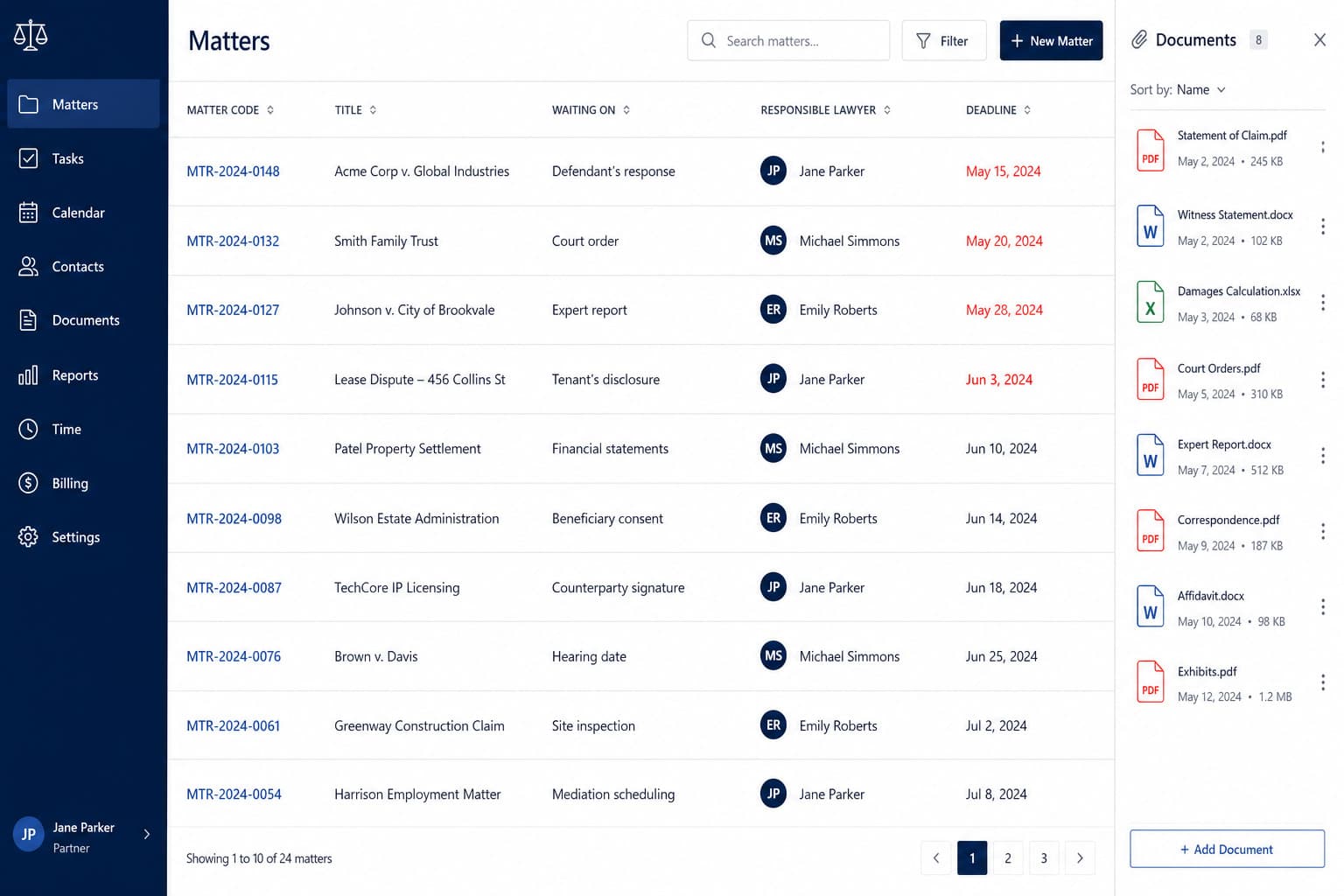
Files lived on personal machines, in email and in a filing cabinet. Nobody could answer the simple question: who is this matter waiting on.
Time to find a document down from 12 minutes to under 1
- Client
- Client asked not to be named
- Duration
- 5 months
- Engagement
- Dedicated team
Context
Ten lawyers, ten file-naming conventions. A document might be on a personal machine, in a mailbox, or in the cabinet downstairs, with no way to know in advance.
When somebody took leave, their matters stalled, because nobody knew what step each was waiting on.
What was built
The data model is built around the MATTER, not the document. Every matter has a state, a responsible person and a next deadline; documents are simply attached to it.
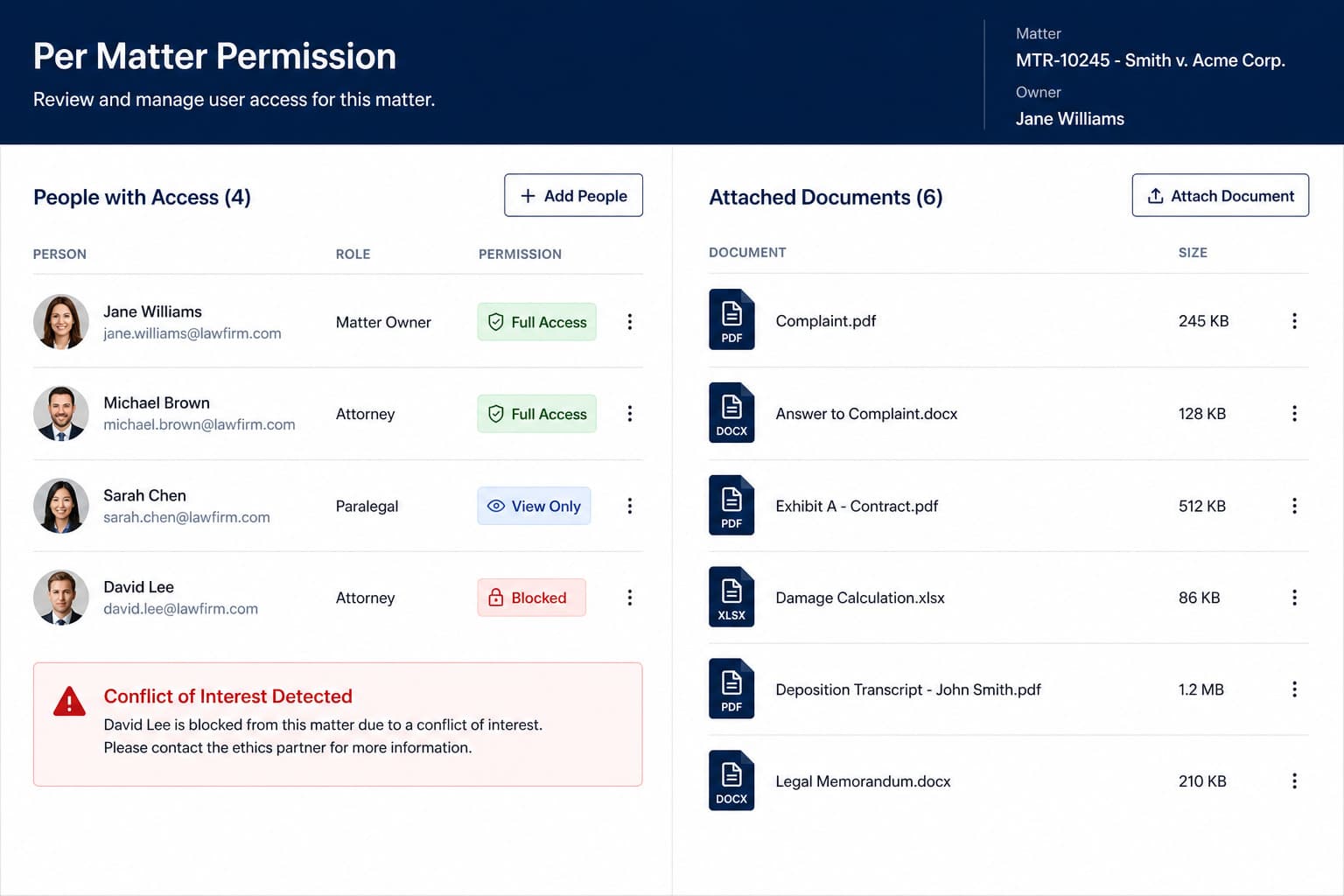
Permissions follow the matter rather than the department: a lawyer sees only matters they are on. That is a conflict-of-interest requirement rather than an ordinary security feature, and I said so explicitly in the scope document.
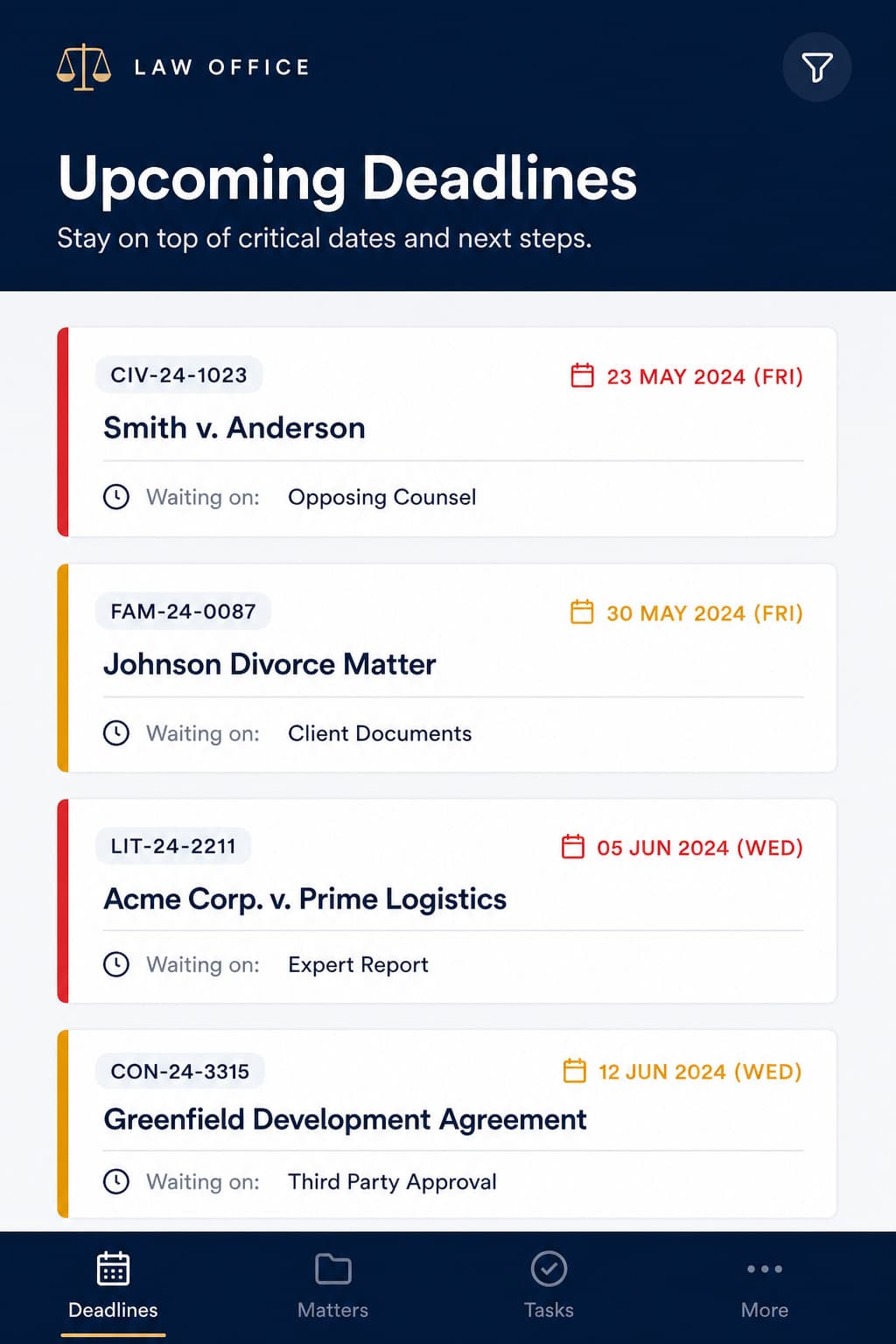
Data capture runs on a phone, at the place the work happens. The real user of this screen is standing up, busy and has one hand free, so it carries only the fields that are actually required.
Outcome
Average time to find a document fell from twelve minutes to under one.
The larger gain was elsewhere: when a lawyer is away, a colleague picks up the matter and sees immediately what it is waiting on, instead of making a phone call to find out.